When the Sun Feels Stronger: A Practical Sun-Protection Playbook for People Taking Prednisone
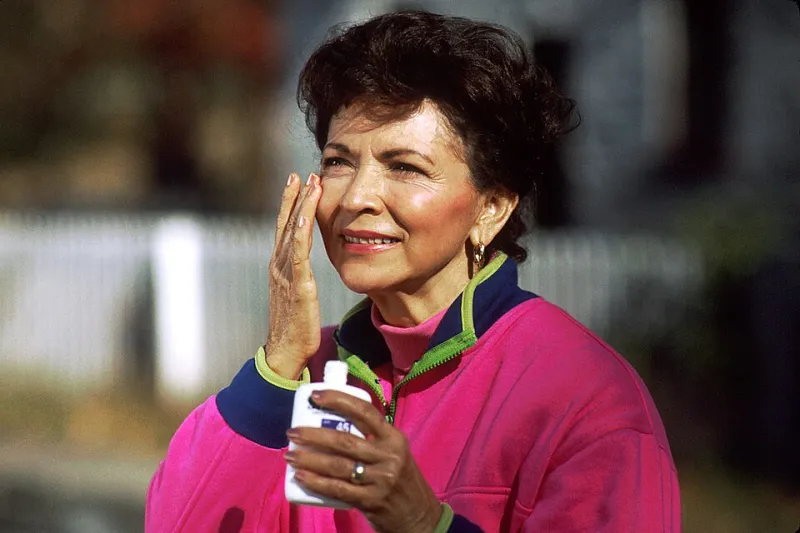
Photo: Bill Branson (photographer), Public domain, via Wikimedia Commons
Most prescriptions for prednisone come with a short list of warnings: take it with food, expect some sleeplessness, watch your blood sugar, do not stop abruptly. Sun protection is often missing from that list entirely. For many patients that omission is harmless. For others, it is the difference between a comfortable summer and a dermatology appointment.
Prednisone does not turn skin into paper, and it does not require anyone to live in a darkened room. But corticosteroids do change the terms of the bargain your skin makes with ultraviolet light, and understanding those terms makes it far easier to spend time outdoors without anxiety.
Why a Steroid Changes the Sun Conversation
Long-term corticosteroid therapy is associated with atrophy of the skin: the epidermis thins, collagen production declines, and the small blood vessels near the surface become more fragile. The practical result is skin that bruises more easily, tears more readily, and heals more slowly after a scrape or a sunburn. Add in the fluid shifts and sweat changes that many people experience on prednisone, and the skin's surface environment is simply less resilient than it used to be.
Photosensitivity is a separate and somewhat murkier issue. Reactions to sunlight have been reported with corticosteroid use, though the strength of the evidence varies and not everyone notices anything unusual. What matters clinically is the combination: a drug that thins the skin, layered on a medication list that may already include a genuinely photosensitizing agent, in a person whose underlying condition may itself be worsened by ultraviolet exposure.
Who Tends to Notice It Most
Risk is not evenly distributed. The following groups generally warrant more attention to sun protection, not less time outdoors:
- People with fair skin, a history of blistering sunburns, or a family history of skin cancer.
- Anyone on higher doses or long-term therapy, particularly beyond a few months.
- Patients also taking doxycycline, tetracycline, fluoroquinolone antibiotics, thiazide diuretics such as hydrochlorothiazide, naproxen or other NSAIDs, isotretinoin, sulfonamide antibiotics, or amiodarone. Each of these can independently increase sun sensitivity.
- People whose prednisone is treating a condition that is itself light-sensitive, such as lupus or dermatomyositis.
- Anyone whose job or hobbies keep them outside: landscapers, construction crews, mail carriers, farmers, runners, cyclists, anglers.
What a Reaction Actually Looks Like
Photosensitivity is not a single presentation. Some people burn noticeably faster than their history would predict. Others develop a blotchy redness confined to the face, neck, forearms, and the backs of the hands, the classic sun-exposed distribution. Itching, hives, and a fine rash can appear within hours of exposure. Existing skin conditions may flare. Melasma-like darkening and steroid acne can worsen with heat and sweat. None of these are emergencies on their own, but they are worth photographing and reporting.
The Principles Worth Memorizing
Broad-spectrum sunscreen with an SPF of 30 to 50 remains the foundation. The number matters less than the application: roughly one ounce for the body, reapplied every two hours and after swimming or heavy sweating. Most people apply a quarter of what they should.
Fabric is more reliable than lotion. A tightly woven long-sleeve shirt, a wide-brimmed hat, and sunglasses rated for UV 400 do more consistent work than any spray bottle. Sun-protective clothing labeled UPF 50 is widely available and increasingly affordable.
Shade is a strategy, not a surrender. Ultraviolet intensity peaks between roughly 10 a.m. and 4 p.m. from late spring through early fall in most of the United States, but the UV index printed in every weather app is a better guide than the clock. Above 6, plan shade and sleeves. Above 8, shorten the exposure.
Windows are not protection. UVA passes through car glass and office glass. Long commutes and long drives are a common and overlooked source of cumulative exposure, particularly on the arm nearest the window.
Surfaces reflect. Water, sand, snow, and pale concrete can bounce a substantial fraction of ultraviolet light back onto skin that a hat brim does not cover.
Building a Routine Around Real Life
For outdoor workers, the practical answer is a uniform: hat, collar, sleeves, and sunscreen on the face, ears, neck, and hands at the start of the shift with a mid-day reapplication kept in a truck or toolbox. For runners and cyclists, early morning outings avoid both peak ultraviolet and peak heat. For errands, a sunscreen that lives next to the car keys removes the decision-making entirely.
One habit worth forming early: check your own skin monthly. Prednisone-related bruising and thinning can mask or mimic other changes, so a baseline photograph of any mole or mark you are unsure about gives a dermatologist something concrete to compare against.
The Vitamin D Question
Patients often ask whether sunscreen will leave them deficient. Sunscreen reduces but does not eliminate cutaneous vitamin D synthesis, and deliberate sun exposure is a poor and imprecise delivery system. If there is a concern, a blood test and a conversation with your prescriber about supplementation is a more reliable route than unprotected exposure.
When to Pick Up the Phone
Contact your clinician for a rash that blisters, a reaction appearing on skin that was covered, a rash accompanied by fever, or a burn that seems slow to heal. Rapidly spreading redness or any sign of infection in a wound deserves prompt attention.
The goal is not to treat every ray of sunlight as a hazard. It is to recognize that prednisone rearranges a few of the variables, and that a modest, repeatable routine handles nearly all of them.