Glucose on Guard: Why Prednisone Can Push Blood Sugar Up and How to Notice It Sooner
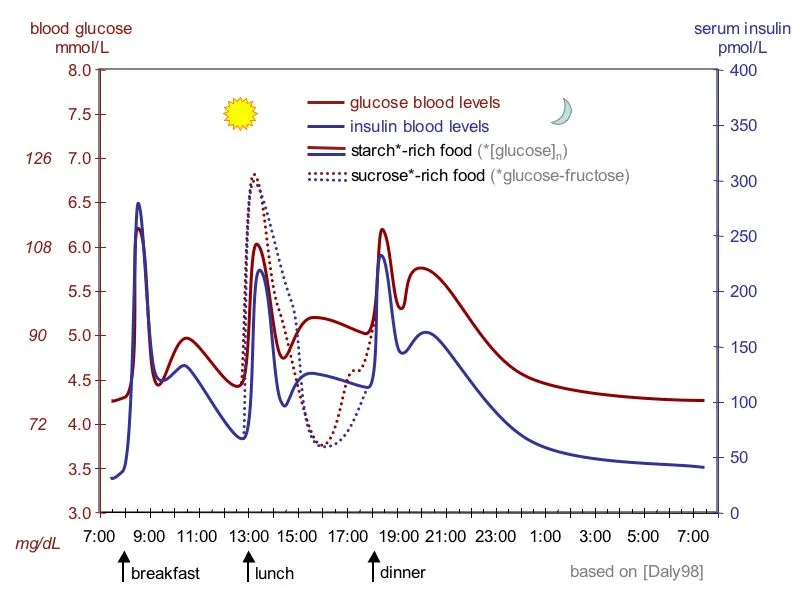
Photo: Jakob Suckale, Michele Solimena, CC BY-SA 3.0, via Wikimedia Commons
Most people prescribed prednisone are warned about the visible effects: the puffiness in the face, the restless nights, the appetite that arrives uninvited. What receives far less airtime is a change that happens quietly in the bloodstream. Prednisone is a corticosteroid, and corticosteroids are among the most reliable pharmacological causes of elevated blood glucose in clinical medicine. That is true for people living with diabetes, and it is equally true for people who have never had a single abnormal glucose reading in their lives.
This is not a reason to fear the medication. It is a reason to look for the effect deliberately rather than stumble onto it months later.
Why a Steroid Moves Blood Sugar at All
Prednisone works by mimicking cortisol, the body's own stress hormone. Cortisol exists partly to mobilize energy under pressure, and one of its jobs is to make sure the brain has glucose available. Prednisone does the same thing, but without the built-in off switch of a normal stress response.
Three mechanisms do most of the work. First, the liver is nudged to produce more glucose through gluconeogenesis. Second, muscle and fat tissue become less responsive to insulin, so glucose circulating in the blood is taken up more slowly. Third, the pancreas has to work harder to compensate, and in some people it cannot keep pace. The result is a rise in circulating glucose that has very little to do with how much dessert was on the plate.
Clinicians sometimes call this steroid-induced hyperglycemia, or informally, steroid diabetes. The label matters less than the recognition that it is a predictable, dose-dependent, and usually reversible phenomenon.
The Timing Is the Story
If there is one practical insight to take from this article, it is that steroid-related glucose elevation is not evenly spread across the day.
Prednisone taken in the morning produces a metabolic effect that builds over the following hours. The highest glucose values tend to appear in the afternoon and early evening, particularly after meals. Meanwhile, the fasting reading taken at seven in the morning may look entirely unremarkable. A person who checks only fasting glucose — or who relies on a single A1c drawn before the course began — can easily conclude that nothing is happening when quite a lot is.
That pattern has a clinical name: postprandial predominance. It is also why a routine fasting panel ordered six weeks after starting prednisone can miss the picture entirely.
Who Should Be Paying Attention
Anyone on a short burst of prednisone for a few days generally does not need to build a monitoring regimen. But as the course stretches into weeks, or the dose climbs, the calculus changes. Consider a conversation with your prescriber if any of the following apply:
- A diagnosis of prediabetes, type 2 diabetes, or a history of gestational diabetes
- A parent or sibling with type 2 diabetes
- Polycystic ovary syndrome or significant central adiposity
- Age over 40, particularly with other risk factors
- A daily dose in the higher range, or a course expected to last a month or longer
- Concurrent steroid exposure from another route — an injected joint, an inhaled preventer, a nasal spray
- A solid organ transplant or another condition requiring prolonged immunosuppression
None of these are disqualifiers for prednisone. They are simply reasons to check rather than assume.
A Workable Home-Tracking Framework
Monitoring does not have to be elaborate, but it does need structure. A few principles help.
Get the plan before the first dose. Ask your clinician whether monitoring is warranted, what target range applies to you specifically, and how often to check. Do not invent targets from a search engine.
Pair every reading with context. A number without a timestamp, a meal, and a dose is nearly useless. Record the reading, the time relative to your prednisone dose, what you ate, and whether you exercised.
Sample the right moments. For most people who are monitoring, a fasting value plus a check roughly two hours after the largest meal of the day captures more than random spot checks. Alternating days is often enough for a moderate course.
Consider a continuous monitor if it is accessible. Some patients find that a two-week sensor reveals an afternoon curve that fingersticks never would have caught. Coverage varies widely by insurer, so ask before assuming.
Bring the log, not your memory. A printout or phone screenshot gives your clinician something to reason with. Recollection tends to compress and distort.
Symptoms That Deserve a Mention
Elevated glucose is often silent, which is precisely why monitoring exists. When symptoms do appear, they tend to look like this: unusual thirst, urinating more often including overnight, blurred vision that comes and goes, persistent fatigue, dry mouth, or slow-healing minor infections.
Severe hyperglycemia is a different matter. Nausea, vomiting, abdominal pain, confusion, rapid breathing, or fruity-smelling breath warrant urgent medical attention rather than a scheduled call.
Questions to Bring to Your Clinician
A short list, written down before the appointment, tends to produce a much better conversation:
- Given my dose and expected duration, should I be monitoring glucose at home?
- What target range should I aim for, and does it differ after meals?
- Which times of day give you the most useful information?
- If my readings run high, what is the threshold that should prompt a call rather than a wait?
- Would a different dosing schedule change the glucose pattern?
- Do any of my other medications compound this effect?
- If medication for glucose becomes necessary, is it typically temporary?
- What should I watch for as the dose is tapered?
What Not to Do
Three cautions are worth stating plainly. Do not stop prednisone abruptly to fix a glucose reading; sudden withdrawal can be dangerous. Do not start a diabetes medication borrowed from a family member. And do not skip meals aggressively to compensate without guidance, particularly if you take insulin or a sulfonylurea, because that combination can produce hypoglycemia.
The Bottom Line
Prednisone's effect on glucose is well understood, highly predictable in its timing, and manageable when it is anticipated. The blind spot is not the biology — it is the assumption that no diabetes diagnosis means no reason to look. A brief conversation before the course begins, a simple log during it, and a review afterward turn a silent metabolic event into an ordinary, handled detail.
This article is editorial guidance for general education and does not replace individualized medical advice. Discuss monitoring and treatment decisions with your prescriber.