One Molecule, Countless Conditions: The Biochemical Logic Behind Prednisone's Remarkable Versatility
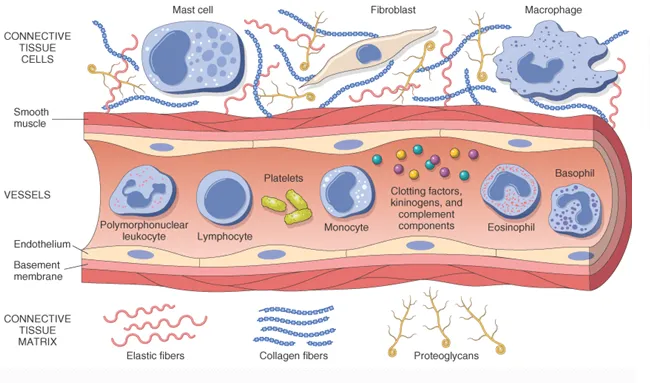
Photo: molecular biology inflammation human body cells scientific illustration, via 4.bp.blogspot.com
Few moments in a physician's office generate more quiet confusion than receiving a prednisone prescription for a condition you never expected to treat with a steroid. A patient managing rheumatoid arthritis may be surprised to find the same medication recommended to a neighbor recovering from a severe poison ivy reaction or to a colleague whose ulcerative colitis has suddenly flared. The instinctive response is skepticism: how can one drug address such fundamentally different problems?
The answer is not pharmaceutical coincidence. It is biochemistry — and once you understand the underlying mechanism, the breadth of prednisone's clinical applications begins to make elegant, if counterintuitive, sense.
The Master Switch Inside Every Cell
Prednisone itself is technically a prodrug. After ingestion, the liver converts it into prednisolone, the biologically active form. Prednisolone then enters cells throughout the body and binds to structures called glucocorticoid receptors — proteins present in virtually every tissue type in the human body. This near-universal receptor distribution is the first clue to prednisone's wide reach.
Once bound, the prednisolone-receptor complex travels into the cell nucleus and directly influences gene expression. It does not merely block a single chemical messenger or inhibit one enzyme. Instead, it functions more like a master regulatory switch, simultaneously suppressing the production of dozens of pro-inflammatory proteins — including cytokines, prostaglandins, and leukotrienes — while upregulating certain anti-inflammatory signals.
This gene-level intervention is what separates corticosteroids from more targeted therapies. A biologic medication, for instance, might block one specific cytokine. Prednisone, by contrast, intervenes upstream, reducing the output of an entire inflammatory cascade before individual messengers are even produced.
Why Inflammation Is the Common Thread
The conditions for which prednisone is most frequently prescribed in the United States — including asthma, allergic reactions, autoimmune disorders, inflammatory bowel disease, and certain skin conditions — appear clinically distinct. Yet they share a common pathological feature: dysregulated or excessive inflammation.
In asthma, airways become inflamed and hyper-responsive, making breathing labored and, in acute cases, dangerous. In rheumatoid arthritis, the immune system mounts an inflammatory assault on joint tissue. In a severe allergic reaction, inflammatory mediators flood the bloodstream, producing symptoms that can range from hives to life-threatening anaphylaxis. In Crohn's disease, the intestinal lining becomes chronically inflamed, disrupting digestion and causing significant pain.
Because inflammation — regardless of its location or trigger — relies on many of the same molecular pathways, a drug that interrupts those pathways broadly can address all of these conditions. Prednisone does not treat asthma and arthritis as separate diseases; it treats the inflammatory mechanism they share.
The Immune System Dimension
Beyond its anti-inflammatory properties, prednisone also exerts meaningful immunosuppressive effects. For autoimmune conditions — diseases in which the immune system incorrectly identifies the body's own tissues as foreign threats — this immunosuppression is therapeutically essential.
Conditions such as lupus, multiple sclerosis exacerbations, pemphigus vulgaris, and certain forms of vasculitis involve immune cells that have become misdirected. Prednisone reduces the activity and proliferation of these cells, lowering the intensity of the autoimmune attack. This is why a patient with systemic lupus erythematosus and a patient with a severe bee sting allergy might both receive prednisone prescriptions — one for its immunosuppressive properties, the other primarily for rapid anti-inflammatory relief.
The distinction matters clinically, and your prescribing physician calibrates the dose accordingly. Autoimmune conditions often require longer courses and more careful tapering, while acute allergic responses may call for a shorter, higher-dose burst.
Tissue Specificity and Formulation Choices
Another dimension of prednisone's versatility is the range of delivery methods available. Oral tablets are the most familiar form, but the same corticosteroid family includes inhaled formulations for asthma management, topical creams for skin inflammation, intravenous preparations for hospital settings, and injected forms for joint-specific relief.
This flexibility allows clinicians to direct the drug's action toward a specific tissue when systemic exposure is undesirable. A patient with localized joint inflammation, for example, may receive a corticosteroid injection directly into the affected joint, concentrating therapeutic benefit while minimizing whole-body effects. The underlying biochemical mechanism remains consistent; only the delivery and concentration change.
What This Means for Your Treatment Plan
For patients receiving a prednisone prescription, understanding this biochemical logic offers practical benefits beyond intellectual satisfaction. It helps contextualize why the drug carries the side effect profile it does — because it acts broadly rather than selectively, its effects extend beyond the targeted tissue. Bone density, blood glucose regulation, immune defense, and sleep architecture can all be influenced, not because the medication is poorly designed, but because its breadth is precisely what makes it effective.
It also reinforces the importance of using prednisone as directed. Because the drug modulates gene expression and affects the adrenal axis — the system responsible for the body's own cortisol production — abrupt discontinuation after extended use can leave the body temporarily unable to regulate inflammation on its own. This is why tapering schedules exist and why adhering to them matters.
Finally, this understanding invites more productive conversations with your healthcare provider. When you recognize that your doctor is not applying the same blunt instrument to different problems but rather deploying a precisely calibrated intervention against a shared biological mechanism, questions about dosage, duration, and monitoring become easier to ask and more meaningful to discuss.
The Broader Picture
Prednisone has been in clinical use for more than six decades, and its continued relevance in modern American medicine is not inertia. It reflects a drug whose mechanism of action aligns with a fundamental truth about human disease: that inflammation, in its many guises, is among the most common drivers of suffering and organ damage across the entire spectrum of medical conditions.
From the emergency department to the rheumatology clinic, from the allergist's office to the gastroenterologist's practice, prednisone occupies a central place in treatment protocols precisely because the body's inflammatory pathways are so deeply conserved and so widely implicated in disease.
At AprednisonLine, our goal is to ensure that every patient who encounters this medication does so with a clear understanding of why it was chosen, how it works, and what responsible use looks like. A prescription that once seemed puzzling often becomes entirely logical once the biochemistry is made visible — and informed patients are, without question, better equipped to participate in their own care.